Services
Profit Strategy
CRO
Website Design & Dev
WhatsApp Marketing
Meta Ads
Ad Creatives
Offer Planning
Footwear
Nauvab: 2,044% Increase in Sales via Paid Social & +400% YoY Growth

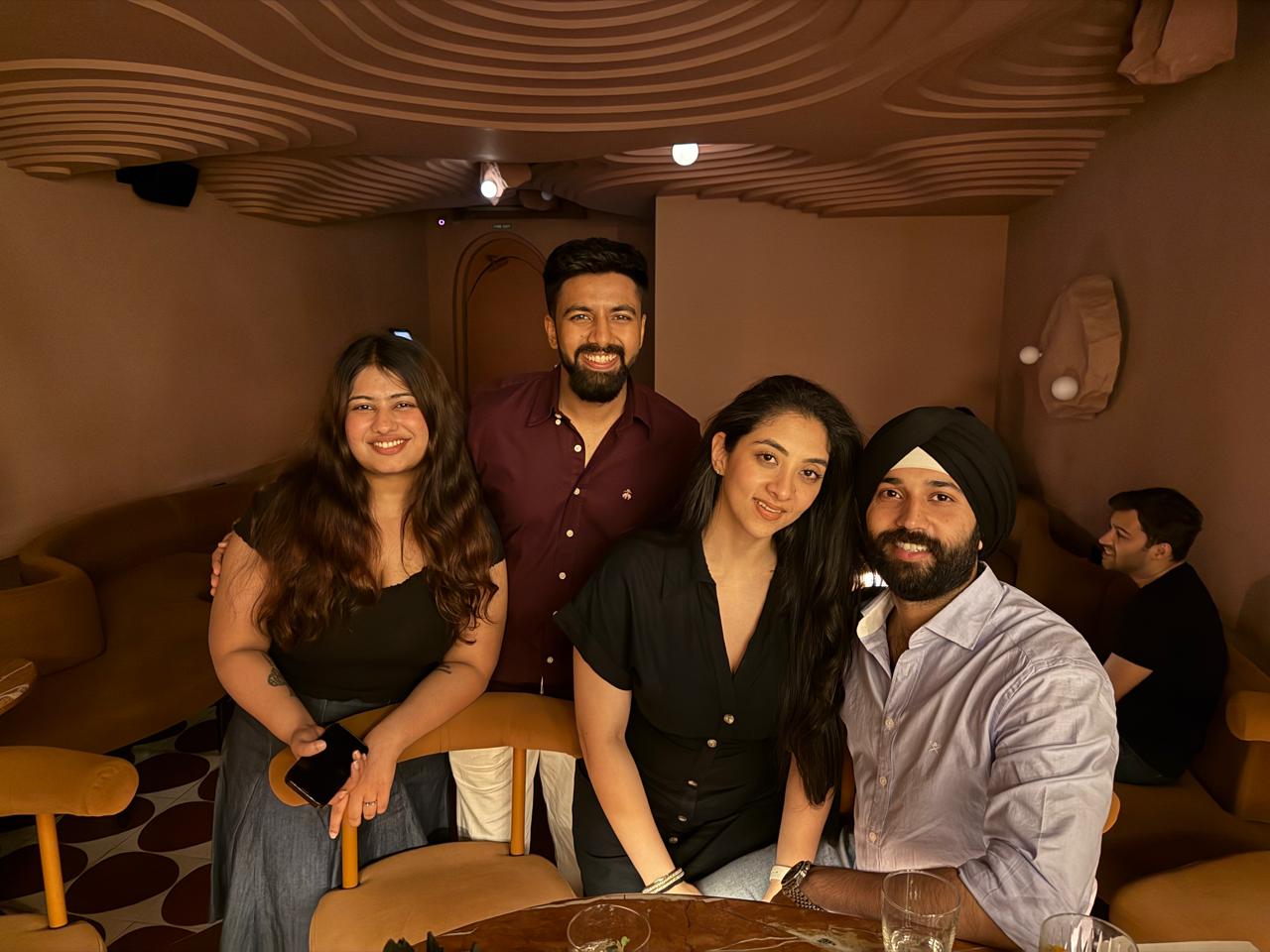
About the brand
Gautam Bali inherited a leather business. What he wanted was to make world-class shoes.
His family has spent more than three decades tanning leather and manufacturing luxury goods for Europe and the USA.
He grew up inside the craft, close enough to know that footwear cannot be faked from the surface. A shoe has to hold shape, take pressure, survive the climate and still carry beauty long after the novelty of buying it has gone.
For all those years, that craft went outward. Gautam wanted it to come home.
What he found waiting for him in India was worse than he expected.
He loved shoes too much to let the classics stay this ordinary, and he had everything he needed to fix them. Nauvab started as a standard, not a startup. Heritage Indian silhouettes, redesigned for daily wear and engineered to a world-class standard.


Phase 1
The Foundation
When we met Gautam in 2024, he wasn't looking for an agency. He wanted a reliable partner who would take ownership of the growth, while he focused on the product!
He was confident his business had immense potential but was stuck under ₹1 lac a quarter. He refused to accept it.
The shoes were never the problem. There was no marketing system built around them. No pricing logic, no offer, no hero product, and a store that did not match what it was selling.
We started with the math, not the ads.
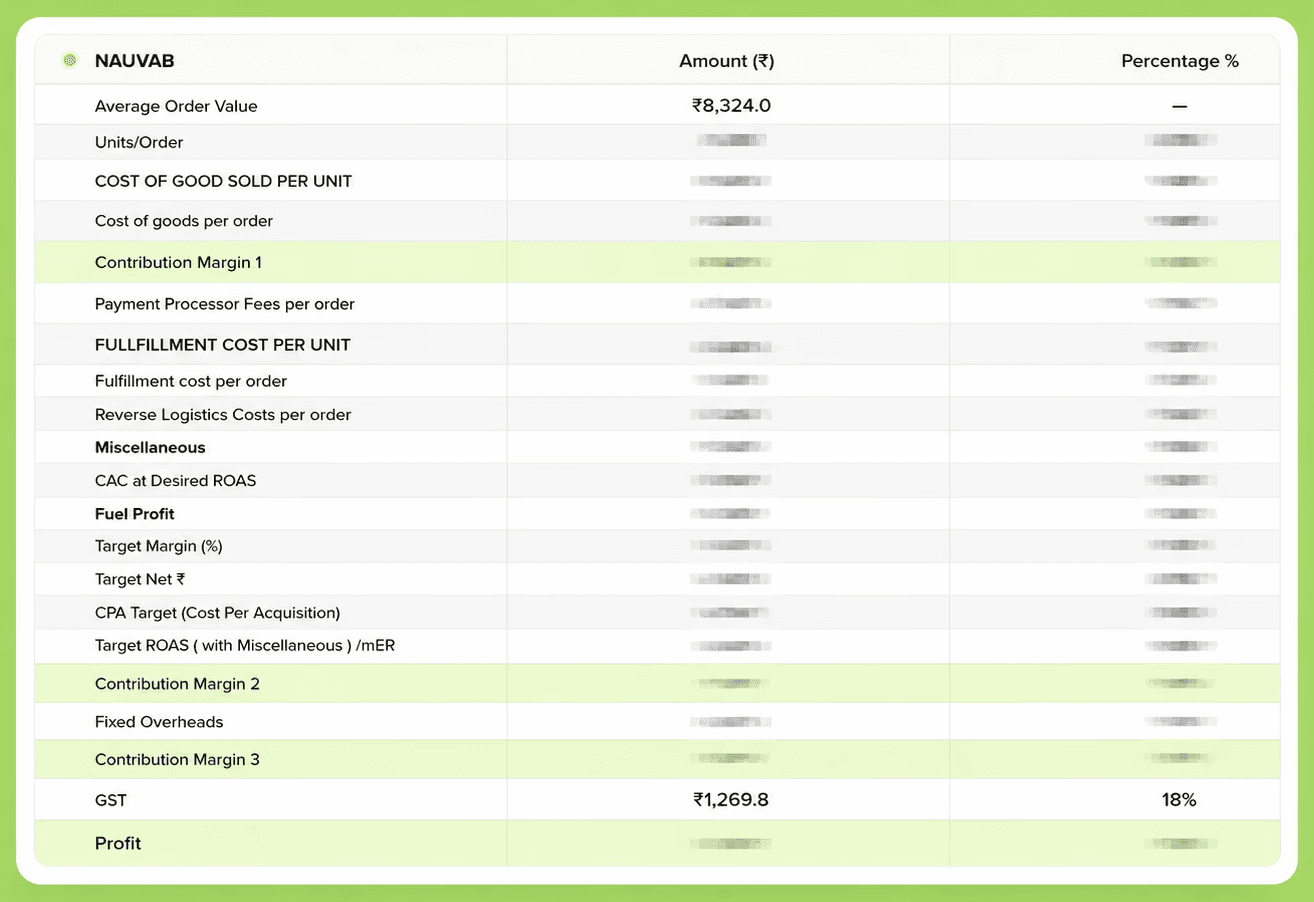
We started with the unit economic
Pricing, margins, a target CAC and ROAS. Cash flow, the oxygen every business runs on, was the top priority. Sell the product first, improve the efficiencies after.


The next objective was to find the hero product.
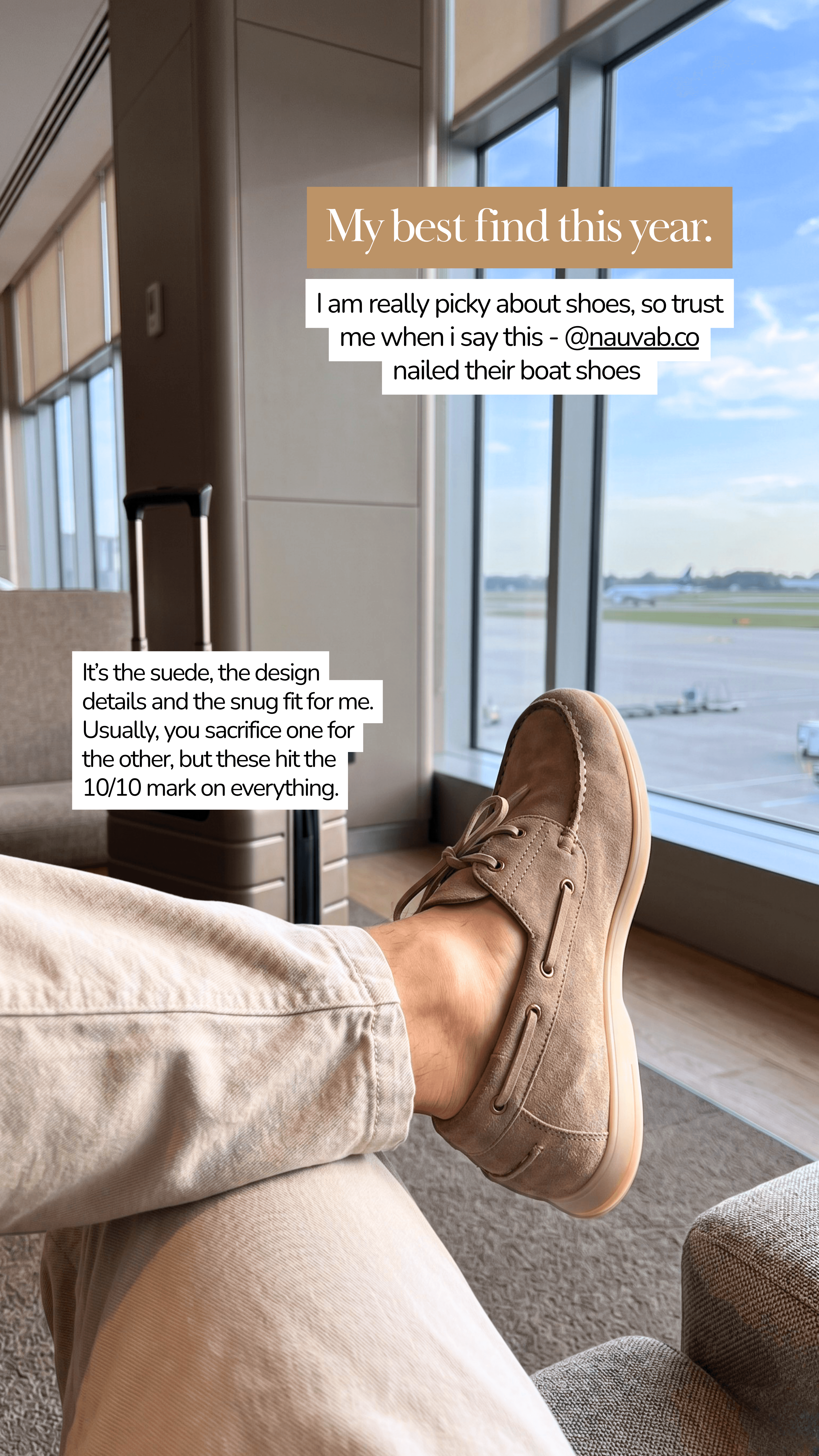
We did not pick it on gut. We scored every collection on our 5 Golden Metrics: contribution margin, variable cost, conversion rate, AOV, and LTV. Within three months, the Nagra Loafer led on all five. The demand was already in the market, so we were capturing intent, not paying to create it.
A few other styles made early sales but never cleared the bar, so we cut them and moved all focus on the winner.
Final step, we built the launch offer.
Nobody had heard of Nauvab. So the launch offer ran on real scarcity, a discount for the first 50 customers only. It was enough to pull a cold brand forward without teaching people to wait for discounts.
We rebuilt the store to match the product quality.
Before starting ads, we rebuilt the store to match the price and the product.
BEFORE
AFTER
Every design and development decision was made with User Experience at the core.
The new product page was built for quick and easy buying decisions. Collection pages got quick filters, and a new menu made navigation (browsing) much easier.
We standardised the photography across the entire catalog.
Integrated a powerful checkout solution to stop fake orders at the source. We set up the data tracking system → GA4, heatmaps, pixels and event tracking, so everything we spent from here was tied to a result.
Only one month in, the system showed results.
Gautam targeted ₹1 crore. We crossed it by 17%
When we started, Gautam had one main goal. "I'd love to do ₹1 crore in a year."
The number matters less than how we got there. Gautam handed us the growth and trusted us to lead it, and spent his own time where it mattered the most.
He built a better shoe. We built the system that sold it.
It was a real partnership from day one, and that is the whole reason the goal was never in doubt.
Phase 2
Scaling Without Breaking
The hard part is never starting. It is scaling.
The foundation worked and demand grew fast.
That is where most brands quietly break. Creative fatigues. ROAS slips. Returns climb. Supply chains crack. Support drowns. Spend keeps rising until it hits a wall.
The job was no longer to build the engine. We cleared every bottleneck, then went full throttle on scale.
We scaled spend and held MER at 3.2 or higher the whole way up. Here is the system that made growth and efficiency move together instead of against each other.
Total Ads
+300%
The engine scaled. The standard didn't move.
Triumph's creative and performance teams work as one unit, with data as the backbone. Creative decisions run on evidence, not guesswork, which is what lets us produce at scale with confidence.
No outside agency to brief. No waiting on feedback and approvals. The whole system under Triumph’s control, while Gautam stayed on the product.
Scaling paid media means scaling content, and content usually means rising costs. But we built a system to keep the costs down.
We adopted AI early, while most brands were still deciding if it was good enough. A big catalogue used to mean a shoot for every product. AI images gave us the same output at a fraction of the cost. The result: statics at volume.
We helped Nauvab set up its own production team, turning well-planned scripts and data-backed content ideas into high-quality video at low cost.
In one year, ad output went from 60 to 240. Four times the volume, while ROAS & CAC remained consistent throughout.



We didn’t split the budget. We concentrated it.
Most brands spread budget evenly across the catalog and hope the ads convert. We put 80% of the spend on the winning collection, the Nagra Loafer, and ran the other 20% on the the next tier of performers through middle of the funnel ads.
From a range of roughly 20+ collections, that one collections (Nagra Loafer) drove 55% of total revenue. One collection became the pillar of the business.


Offers built to raise order value.
We do not treat offers as discounts. We build offers that raise order value and trust at the same time.
A discount decides who shows up. Cut deep and you attract a price buyer. Hold your price and let the offer do the work, and you attract a value buyer, the one with real lifetime value.
The first-order discount came down from 10% to nothing, the median bundle discount from 22% to 13%, and the share of orders that were bundles rose from 15% to 27%.
Then we removed every reason to hesitate.
Risk Reversal with unconditional guarantees.
No Question Asked Returns & Free Size Exchange removed the two top fears in footwear, a new unknown brand and the wrong size or fitting.
User journey optimised for 0 confusions.
The common size came preselected, the size guide got sharper, styling guides helped pick the colour and size, and a native video of the shoe in real life setting on every PDP.
Customer support that converts, not replies.
We trained the team to convert sell, not to answer. First response dropped from 24 hours to 1 hour. Time to resolution from 5 days to 1-2 Days.
A cleaner return system that works for both sides.
The customer got a process that was simple and fast. Nauvab got one that was organised and reliable to operate.
Cohort analysis for optimized checkout paths.
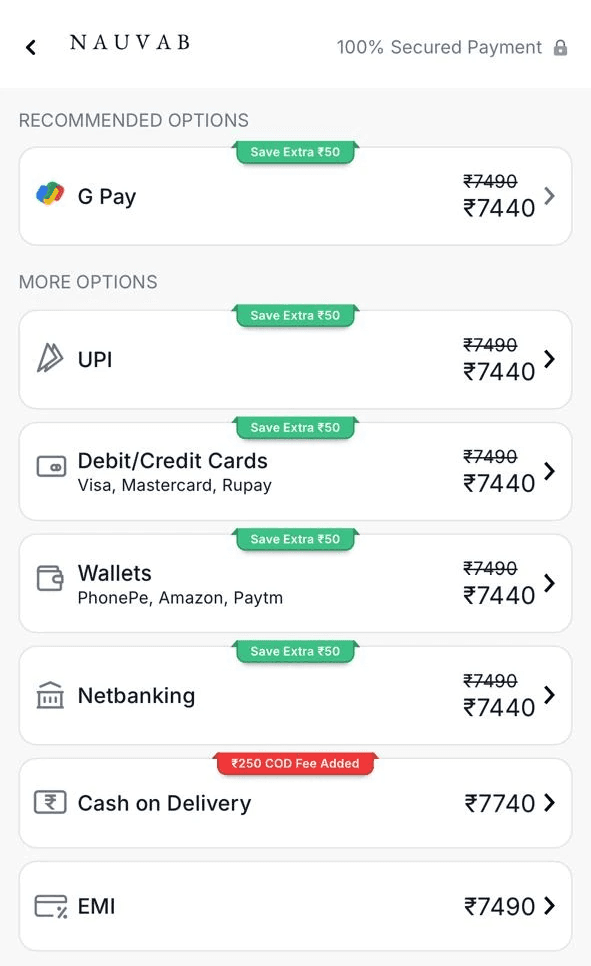
Increased friction for high risk buyers, to nudge them towards prepaid orders. Smoother process for low risk buyers.





Result
We grew fast and stayed efficient at the same time. The proof is in the numbers.
Bottlenecks Cleared
We grew fast and stayed efficient at the same time. The proof is in the numbers.
COD Cancellations
RTO
Return Rate
Phase 3
The Way Beyond
It took two years of consistent effort to build a sustainably profitable customer acquisition system for Nauvab, and now its time to hammer the last nail, i.e., getting the same customers to buy again and again and….
The Launch Calendar, driven by data & research
You cannot grow lifetime value with a catalog that never evolves or offers something fresh. A customer who loves their Nagra Loafer has nothing left to buy.
So we plan the launch calendar a year in advance, built from sales data and category research.
It comes down to two things.
Depth. Seasonal and limited-time colourways of the Nagra Loafer, the top performer. The same shoe becomes a new purchase. Owning one becomes the reason to buy the next.
Width. New categories built around the pair the customer already owns. Office-wear, boots, and silhouettes made for the days a loafer was never meant for. Nothing enters the calendar on instinct. Every product is scored on incremental revenue, order value and view to order conversion before it earns a slot.


The relationship begins after the purchase
Most brands disappear after the sale, only to pop-up again with a discount. We stay in conversation on WhatsApp for 14 days after the order is placed.
Not to sell, but to be there for the customer when it actually counts.
Three conversations do the real work:
How to care for suede & leather. How to clean and store, how often and what ruins a pair fastest.
A fit check in the first week. If the size is off, the exchange is arranged before the customer has to ask for it.
A referral code to pass on to friends and family, offered at the moment satisfaction is highest.
Fourteen days in, the customer is happy with the pair and certain the brand behind it cares.
That is when we present the next pair to them. Another colour of the one they own, or the category that fits their wardrobe. Never chasing the second order, but making it obvious.
Build the product. We'll build the growth.